Fixing leaks
The region's drinking water network is largely 30-100 years old and made up of 2,543km of pipeline (that’s the equivalent distance of flying from Wellington to Sydney).
Over time pipes, valves and fittings start to wear and tear, and leaks can form around the network. Almost all the water pipes are buried so finding leaks that don’t come to the surface is hard.
Latest annual water loss estimates show that the average level of water loss dropped from 41% to 37% across the 2024/25 financial year (which includes both public and private leaks). We cannot accurately track current water loss without universal metering.
This figure includes both public and private leaks and highlights the ongoing challenges we face.
Essentially, the water pipes in the region are aging at a faster rate than we can replace them – old pipes burst and leak more often and some of the pipes in our region are 100 or more years old.
For the latest leaks numbers, check out Leaks by the Numbers.
How we prioritise leaks
Wellington Water, on behalf of our council owners, has dedicated teams out finding and fixing leaks every day. But there are a lot of leaks out there and we simply can't fix them all. So, we must prioritise where our crews go to make the best use of our resources and focus on fixing the biggest leaks that have the most impact on water supply. Many of which are underground and not easy to spot.
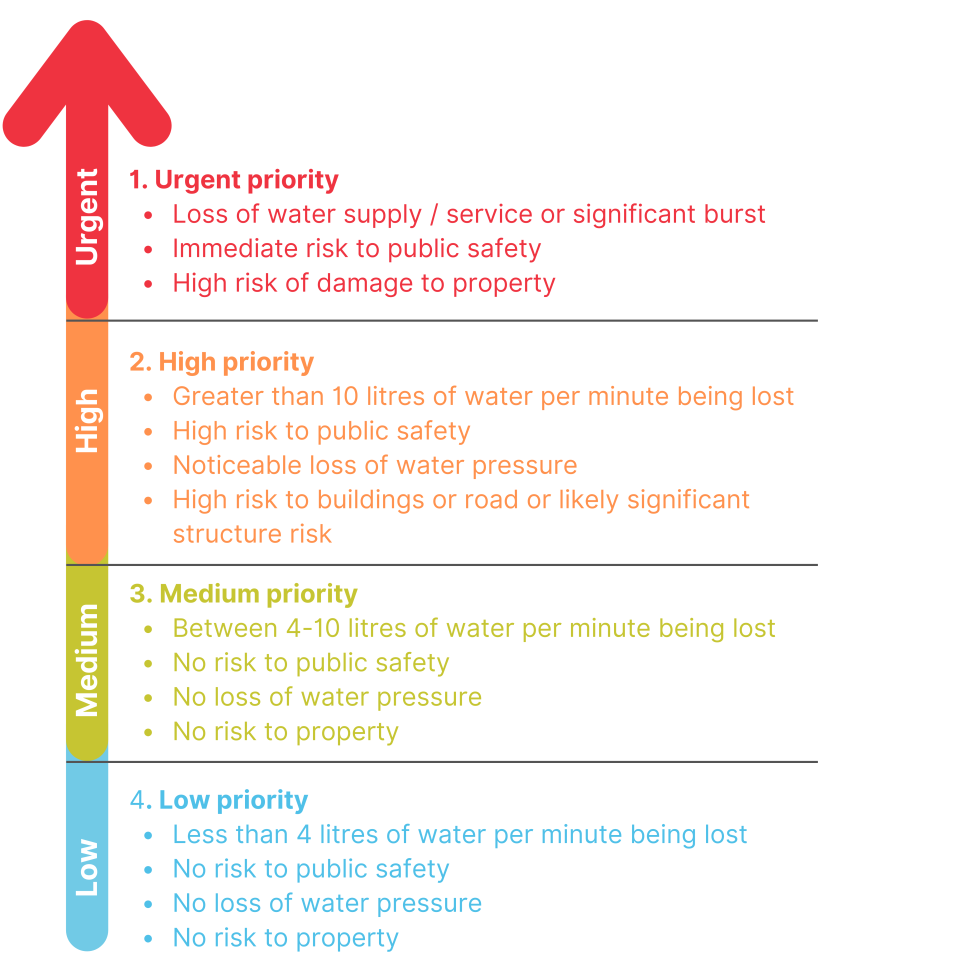
The leaks that meet the criteria for 'urgent priority' leaks jump to the top of the list and are dealt with first. This means that small 'low priority' leaks such as a leaking toby will be deferred for attention later, when resources allow.
What Wellington Water is doing about leaks
Wellington Water has clear direction to work with councils to address this water loss and leaks as a priority. As a region, we want to avoid having to put in place tighter water restrictions over summer or ask residents to reduce their usage at short notice, which may be the case if we can’t sufficiently reduce the level of water use and leaks.
The recent reduction in water loss reflects increased funding from our councils and enhanced leak repair efforts, which began in late January 2024. We anticipate further reductions in annual water loss as we continue to monitor our progress.
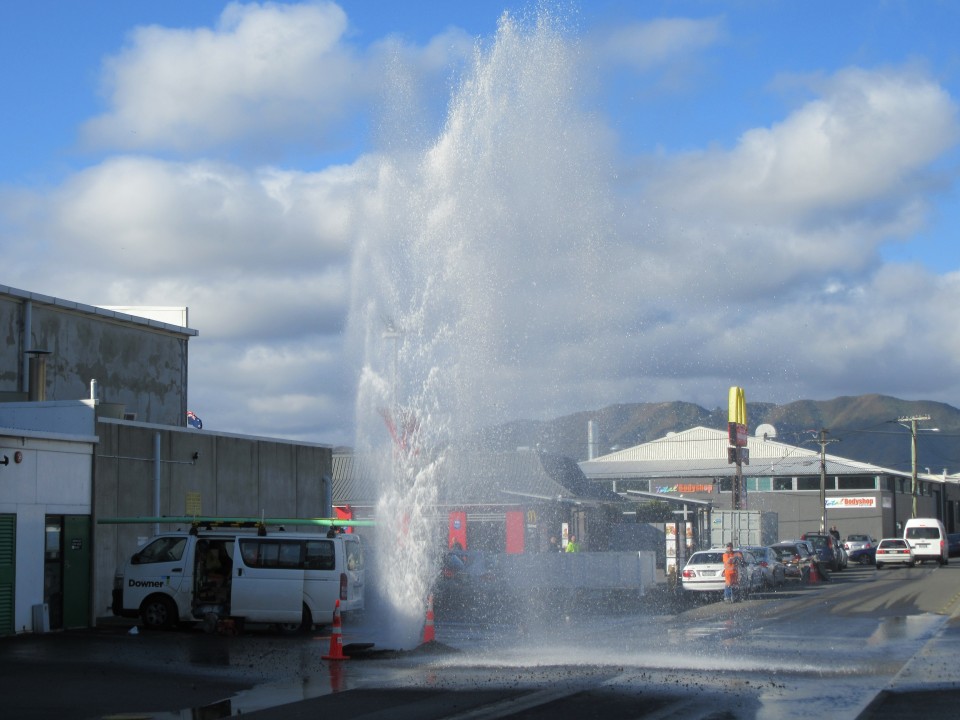
We focus on finding and fixing the most significant leaks in the public network. The biggest leaks tend to be underground losing 40 litres or more a minute and are not visible to the public. This means the smallest leaks, which are quite often bubbling to the surface may take us longer to get to.
To do this we have come up with a clear prioritisation process to ensure our work is as effective as possible. The leaks that meet the criteria for 'urgent priority' leaks jump to the top of the list and are dealt with first. This means that small 'low priority' leaks such as a leaking toby will be deferred for attention later, when resources allow.
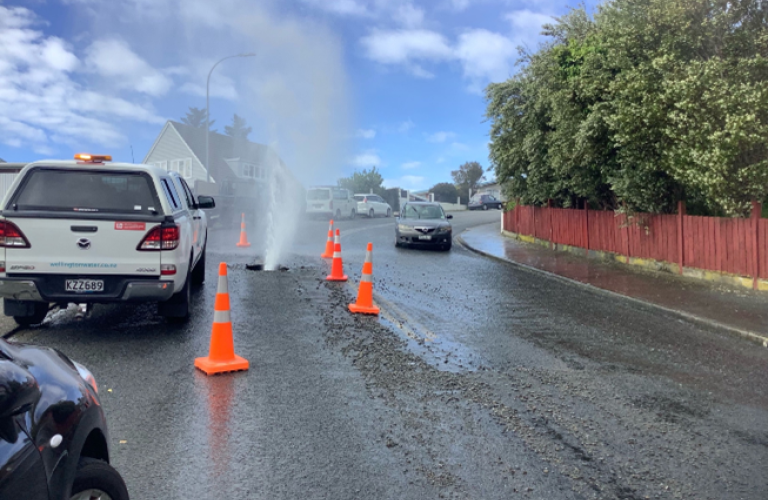
Prioritisation Examples


Monthly fixed leaks
Maintaining Wellington's aging public water network is challenging.
We have to focus our efforts and resources on the biggest leaks that have the most impact on water supply. This ensures we’re saving the most water we can.
Each month, we provide an update on our progress to get the leaks backlog down to a sustainable level here.
How we find leaks
We get notifications from the public through the councils and directly and put them through the prioritisation process.
We also monitor overall water use through a network of 1,520 water meters throughout the regions which detect unusual water use patterns – for example, if water use is not dropping during the night when usage is commonly low, that’s a likely result of leaks.
We focus this work on high priority areas, which we call “District Metered Areas” (DMAs). We’re able to estimate how much water is being wasted through losses by looking at the flow rates in these areas at night, when normal water usage is relatively low.
Wellington Water focuses on areas that are losing the most water. Our leak detection teams use the area meters and acoustic listening devices to detect leaks on private properties and the public network. Once identified, individual leaks are then prioritised and our crews work on fixing these, working from the most urgent and significant leaks first.
Find and fix leaks on your property
While we continue to work diligently to fix leaks, we encourage residents to actively find and fix leaks on their properties as every little bit counts. Leaks are anything from broken pipes under the house to dripping taps and toilets, they all contribute significantly to water being wasted in the home.
Checklist:
- Check all taps, inside and outside the home.
- Look behind the dishwasher for any signs of water.
- In dry weather, look for damp patches in the garden, lawn, or driveway, and look for any water seeping through cracks in the concrete.
- Listen for running water inside your home when no taps, hoses, or showers are turned on, and if you have a water meter check how much you use periodically.
If you discover or suspect a leak, get in touch with a registered plumber to get it fixed.
Watch me