Stormwater
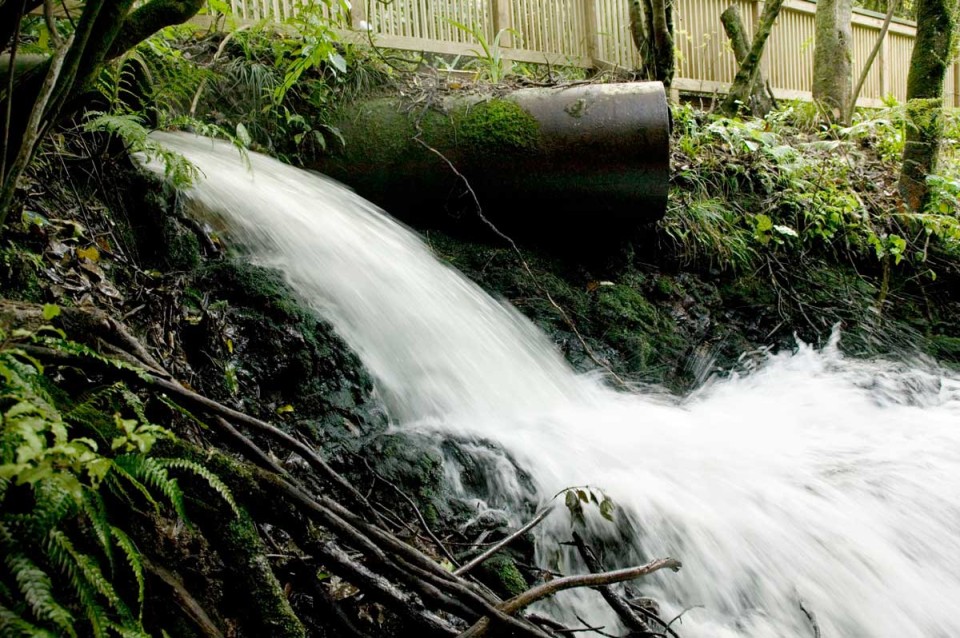
Stormwater is rain which has run off hard surfaces such as roofs, roads and carparks. Stormwater is not treated, and the water ends up in streams and harbours.
The stormwater network includes a system of kerbs, channels and underground pipes that drain the rain off our land, roads and footpaths, and from our gutters into our streams, rivers and eventually out to sea. On the way, this rainwater picks up contaminants such as bacteria and heavy metals from the surfaces it runs over.
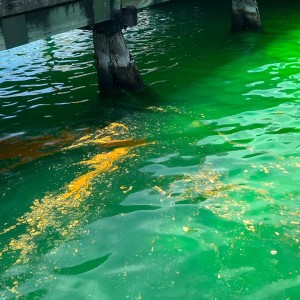
Stormwater and wastewater use two different pipe systems - wastewater pipes take the wastewater to a treatment plant while stormwater pipes take stormwater to the nearest waterway. Because of this, we all share the responsibility to keep the stormwater network clean and protect our region’s waterways and the environment.
Every day we undertake tasks that can impact on the stormwater network. Because of this, it is illegal for anything other than rainwater to go into stormwater drains.
Tiaki Wai is committed to helping protect our harbours, rivers and streams by reducing pollution from the stormwater network.
We have a long term strategy for stormwater management that will guide us on our journey to improving water quality - read our Stormwater Management strategy.
Things you can do that will make a big difference in helping us to protect the network and the environment:
Wash your car on the grass
The water runoff from washing your car contains heavy metals and detergents. This runoff, when washed on concrete or on the side of the road, can enter our stormwater network and flows untreated into our local waterways and ocean.
Wash your car on the grass as it allows the dirty and soapy water to be absorbed into the ground, filtering the water and preventing it from washing into a stormwater drain.
Or use a commercial car wash facility where the runoff is connected to the wastewater network, therefore the water will be treated before being returned to the environment.
Collect dog poo and throw it in the bin
Dog poo contains harmful bacteria like e.coli. When dog poo is left on grassy areas, footpaths, and berms, bacteria can end up our stormwater network when rain washes it onto roads, letting it flow, untreated into our local waterways and oceans.
Fix car leaks
Oil and other petroleum products are toxic to aquatic life and our waterways so it’s important to regularly service your car. This stops oil from leaking from your car onto the road and then into the stormwater network. It only takes one litre of oil to contaminate a million litres of water
Don’t pour hazardous substances into household or stormwater drains
Paints (oil and water based) and thinners are toxic to aquatic life, and cause discoloration of streams. Make sure you read the instructions on the container label and clean and dispose of paints, thinners, and other hazardous substances responsibly. Be careful to clean up after any spills and don’t pour any chemicals into household or stormwater drains.
Each council has its own hazardous substances page on their website which has information on the disposal and cleaning of hazardous substances:
Managing streams and open drains
Streams and open drains are an important part of the stormwater network, carrying stormwater across public and private land to rivers and the coast. Keeping them clear and maintained helps reduce flood risk, protect property and support healthy waterways. Everyone has a role to play in maintaining our waterways.
Property owners are responsible for maintaining streams and open drains on their land. Tiaki Wai and councils work jointly to manage the stormwater network on public land.
Regular maintenance of streams, their banks and open drains helps reduce flood risk for your property.
Keeping waterways clear is a shared responsibility between property owners, councils and Tiaki Wai, including clearing debris after storm events.
Tips for managing a flooding event
Most of our stormwater network was designed and built years ago to be able to cope with storms of a five or 10 per cent annual likelihood. Many heavy rain events now can easily exceed that, and be highly localised – swamping the network and causing flooding.
Heavy rain overwhelm the stormwater and wastewater networks in a matter of moments. There are some things residents can do to protect their property and reduce the risk of flooding on their property.
Before the flood occurs, do this
- Check the kerb and channel on the street, and clear it of debris.
- If there’s a sump (street drain) near-by, ensure it’s clear.
- If it’s safe to do so, check your guttering and downpipes to make sure they are clear
- Keep known areas of overland flow or low areas on your property clear of any items
- Often sheds and garages occupy low points – lift valuable items off the floor if you are worried about flooding.
- It is always a good idea to have an emergency water supply and grab-and-go bag ready, including dry towels and sanitising gel.
Tiaki Wai and council roading crews are responsible for keeping sumps clear. Prior to known events, crews will check on known trouble spots and risk areas, ensuring stormwater grates, inlets and outlets are clear.
During the flood, do this
If your property or neighbourhood is being affected by flooding, there are a few things you should do
- Ensure your personal safety – have your emergency grab-and-go bag ready in case things get worse.
- Treat all floodwater as contaminated. Do not play in it, and wash your hands after coming into contact with it before touching food or your face.
- If you have to go outside, be extremely careful. Overwhelmed stormwater networks could have hidden hazards.
- Report flooding to your local council.
Once the flooding is over, do this
If your property has been affected by flooding, you may need to make an insurance claim. Take photos of damage if you can.
- Report the facts of flooding to your council and/or Tiaki Wai. Information about flooding will be useful for flood investigations and future planning.
- Note that council may not be able to do anything about the risk of future flooding in the short term
- Stormwater upgrades are often very costly, as working on only a part of the network will not change its overall performance.
- There is often not a lot of flexibility to bring forward major infrastructure, but the more that we know about actual flooding events and impacts, the better they can design and prioritise solutions in the future.
- In some areas wastewater overflows are a common occurrence after rain events. This is caused by rain water over saturating the ground, causing stormwater to find its way into the wastewater network. To see if there has been a wastewater overflow in your area look on our network status map.
Stormwater Management Strategy
Monitoring and testing
Closed-circuit television drain inspections
Because drains are largely hidden from view, the exact cause and nature of problems may not be immediately apparent. With the passage of time and usage, drains can deteriorate. It may take several years but drains can suffer as a result of many factors such as ground movement, construction defects and tree root invasion.
Closed-circuit television (CCTV) surveys of drains, pipes and sewers provide accurate and cost effective ways to detect problems and help establish the most practical options for repair. This involves using a special camera to view inside the pipe to locate any problems.
A CCTV inspection can be carried out with the minimum of fuss and disruption.
The CCTV camera is inserted into the drain via a manhole or appropriate access point and pushed or powered through the pipe. As the camera travels along the pipe, the image is relayed to a monitor screen above ground. The operator will then log any structural defects and record the location of each defect along the pipe length.
A survey report is then provided which lists the type and location of any defects. This can be backed up with photographs or video records together with a site plan showing the drains location.
|
Cause | Consequences | |
| Tree roots in drains | Roots seeking moisture | Materials flowing through the drain will snag on the roots causing continual blockages. Roots dislodge or crack the drain, resulting in leakage and further damage |
|
| Fractured pipe | Pressure above ground | Cracks or fractures in drains leak water which destabilises the surrounding soil. This will result in further damage to the drain and even subsidence to buildings nearby |
|
| Collapsed drain | Several possible causes | Drain becomes unusable with high likelihood of frequent blockages, environmental damage and building subsidence |
Houghton Bay leachate
Houghton Bay has a long history of discharges of leachate, which originates from the former Houghton Valley landfill and is carried to the bay via the stormwater system.
Historical causes
The closed landfill extends up the original valley floor from Cave Rd to Houghton Valley School and on up to Sinclair Park. It was opened in 1951 and was filled in two stages. Stage 1 was completed in 1963 and stage 2 in 1971. The land is currently used as playing fields.
Since its closure, landfill management methodologies have improved considerably. Current best practice includes catchment lining, layering, diverting water flows, and capping.
These practices were not used in the Houghton Valley landfill.
The result is that water percolating from rain and subsurface water picks up dissolved and suspended components from the biodegrading activity of anaerobic bacteria in the landfill. These components form 'leachate', which enters the stormwater network that lies beneath the landfill.
These conditions are exacerbated by field drains in place that capture groundwater from the landfill, and are connected to the stormwater system. This water then discharges onto Houghton Bay beach above the high water mark.
Investigations
This situation has been investigated a number of times since 1990, with various actions initiated.
An investigation was carried out in 2012 to determine the state of the environment in the receiving waters adjacent to the stormwater outfall. The investigation found the effects of the discharge in the receiving environment are minor. Mean concentrations of heavy metals from sediment samples and water quality samples show that these are below the possible negative effects for recreational purposes or health issues (Annual Compliance Report, August 2012).
The investigation also noted that leachate-contaminated stormwater discharges to the receiving waters only during extreme wet weather conditions (during dry weather, the flows are much lower and can be diverted into the wastewater network).
Based on that investigation, a detailed assessment was undertaken of management and treatment options to further “prevent or minimise” inputs of contaminants (leachate) being discharged into the stormwater culvert.
Managing the problem
The following management and treatment options are now in place:
- Diverting the dry weather base flow into the wastewater network and control of leachate flow in the stormwater pipe (diversion) by a weir arrangement
- Monthly monitoring of weir overflows and stormwater outlets
- Removing encrustation growth in the stormwater pipe – flushing the pipeline on an annual basis or more frequently if required
- Carrying out fortnightly inspections of the diversion structure
We have also installed a depth sensor in the dry weather leachate diversion manhole. Linked to our telemetry system to receive alerts, this gives us an early warning that maintenance of the diversion structure is required. This reduces the likelihood of leachate entering the outfall and allow speedier identification and resolution of any issues.
We have inspected sumps in the catchment to identify whether sump boxes have baffles to trap debris. Preventing debris entering the stormwater main reduces potential blockages of the diversion chamber.
In 2013 we carried out an investigation to identify an engineering solution for the odour issues that is being experienced around the Houghton Bay stormwater outfall. This investigation recommended installing an odour control chamber. The odour-reducing equipment has been installed and is operating. It is maintained monthly.
Collaborative effort
We've collaborated closely with stakeholders interested in public and environmental health issues relating to Houghton Bay, including Wellington City Council and Greater Wellington Regional Council. Our report on behalf of Wellington City Council on the Houghton Bay stormwater outfall consent to Greater Wellington Regional Council in August 2016 showed that conditions at the outfall fully complied with the current resource consent.
We appreciate that even occasional discharges to Houghton Bay are not ideal. However, we and our colleagues are doing what we can to deal with an historical situation, and to minimise future incidents and impacts.
Drain Inspections
With the passage of time and usage, drains can deteriorater as a result of many factors such as ground movement, construction defects and tree root invasion.
Because drains are largely hidden from view, Wellington Water uses closed-circuit television (CCTV) to get an accurate and cost effective survey of drains, pipes and sewers with a minimum of disruption, allowing the detection of problems and establishing the most practical options for repair.
The CCTV camera is inserted into the drain via a manhole or appropriate access point and pushed or powered through the pipe. As the camera travels along the pipe, the image is relayed to a monitor screen above ground. The operator will then log any structural defects and record the location of each defect along the pipe length.
A survey report is then provided which lists the type and location of any defects. This can be backed up with photographs or video records together with a site plan showing the drains location.
|
Common faults revealed by CCTV |
Cause |
Consequences |
|
Tree roots in drains |
Roots seeking moisture |
Materials flowing through the drain will snag on the roots causing continual blockages. Roots dislodge or crack the drain, resulting in leakage and further damage |
|
Fractured pipe |
Pressure above ground |
Cracks or fractures in drains leak water which destabilises the surrounding soil. This will result in further damage to the drain and even subsidence to buildings nearby |
|
Collapsed drain |
Several possible causes |
Drain becomes unusable with high likelihood of frequent blockages, environmental damage and building subsidence |
Global Stormwater Consent
We require resource consents to legally operate the stormwater network, but they also enable proactive and integrated planning and management to reduce contamination from the network, as we work towards giving effect to Te Mana o te Wai.You can view these documents below:
-
Draft Global Stormwater Consent:
-
Stormwater Management Strategy (19MB PDF) (which helps inform the above consent)
Stormwater FAQs
-
Where can I see flood hazard information for my property?
You can find flood hazard information on your local council’s website using their online maps. These show areas that may flood, including flood zones and natural overland flow paths.
-
Will the stormwater service zones change in the future?
Yes. The stormwater service zones for Hutt City, Porirua City and Wellington City will be reviewed over time to align with the more detailed approach used for Upper Hutt City, ensuring greater consistency across the region.
-
Why is Upper Hutt City's approach different?
For Upper Hutt City, a more detailed assessment was undertaken. This includes some properties located on the edge of urban areas, as well as properties in specific intensive development areas that receive stormwater services.
This approach more accurately identifies the properties that both contribute to and benefit from the public stormwater network.
-
How have urban stormwater service zones been defined?
Each council area has its own urban stormwater service zone:
- Hutt City
- Porirua City
- Upper Hutt City
- Wellington City
For Hutt City, Porirua City and Wellington City, urban stormwater zones have been based on the urban zones identified in each council's district plan.
-
Why do stormwater charges apply in urban areas?
Properties within urban stormwater service zones benefit from the public stormwater network. Charges help fund the costs of operating, maintaining and renewing this infrastructure to ensure it continues to protect communities and property from stormwater impacts.
-
How are stormwater service zones organised?
The region is divided into urban and rural stormwater service zones.
- Urban stormwater service zones include built-up areas where properties are connected to, or benefit from, public stormwater infrastructure such as pipes, drains and pump stations.
- Rural stormwater service zones cover areas that do not receive the same level of urban stormwater services.
-
What is a stormwater service zone?
Stormwater service zones help ensure stormwater services are managed and funded fairly and transparently across the region. These zones are based on how land is used and the level of stormwater service provided to properties.
-
What can I do to reduce flood risk on my property?
To help reduce flood risk, you can:
• keep your drains and gutters clear and well maintained
• make sure natural water flow paths aren’t blocked
• consider measures to protect your property from flooding.If you’re thinking about making changes to your property, it’s a good idea to talk to a qualified engineer or building professional first.
-
Who is responsible for maintaining the stormwater network?
We manage the public stormwater network, which serves whole communities—even where parts of it run under or across private land.
Property owners are responsible for stormwater systems on their own property. This includes private pipes, drains, streams and natural flow paths, up to where they connect to the public network.
-
How can I find out what Tiaki Wai is doing about stormwater issues in my area?
You can get updates on maintenance, renewals and upgrade work from us or your local council.
If you’ve reported a specific issue, we will keep you updated on its progress.
-
My flooding issue was reported before Tiaki Wai was established. What happens now?
If your issue was already reported, we will continue managing it as part of the transition from Wellington Water.
You don’t need to report it again unless something has changed or new flooding has occurred.
-
Can I find out whether my property has flooded before?
You may be able to get this information from your local council or from past reports made to them.
What’s available depends on what’s been recorded for your area, so records may be limited in some cases.
-
Why am I being charged for stormwater services if there isn't a stormwater pipe on my street?
Stormwater charges help fund the whole network that manages rainwater across your area—not just pipes. This includes maintaining, repairing and upgrading all types of stormwater infrastructure that collects and carries runoff and helps reduce flood risk across the area.
Stormwater services are managed across whole catchments. Even if there isn’t a public asset directly outside your property, it still benefits from the wider network.
-
Who is responsible for roadside drains and sumps (kerb inlets)?
Councils are responsible for roadside stormwater systems, including kerb inlets (sumps) and the pipes connected to them.
The relevant road authority manages road maintenance. If responsibility is shared, we work with the right organisation to make sure the issue is dealt with.
-
Does Tiaki Wai maintain streams and waterways?
We maintain some streams and waterways when they’re part of the public stormwater network or where maintenance responsibilities have been assigned to Tiaki Wai.
However, not all waterways are managed by Tiaki Wai. Who looks after them depends on where they are and what they’re used for.
If you’re not sure who is responsible for a stream or waterway, contact us and we can point you in the right direction.
-
What stormwater infrastructure am I responsible for on my property?
If it’s on your property, it’s usually your responsibility. This includes private stormwater pipes, drains, sumps and any other stormwater features within your boundary, including streams.
Keeping these in good condition helps reduce the risk of flooding.
-
Who is responsible for managing stormwater?
Stormwater is managed by different groups:
• Tiaki Wai looks after the public stormwater network and plans how it’s funded and improved over time.
• Councils manage stormwater on roads, transport-related infrastructure and on council owned lands such as parks and reserves.
• Property owners are responsible for stormwater systems on their own land. -
What stormwater projects have recently been completed or are planned in my area?
We plan and deliver maintenance, renewals and upgrade projects across the network. Work is prioritised based on things like asset condition, flood risk, growth, environmental outcomes and available funding.
To find out what’s happening in your area, you can contact us or your local council for the latest information.
-
When was the stormwater network in my area last cleaned, renewed or upgraded?
Work on the stormwater network happens at different times depending on its condition, risk and priority.
If you want details about a specific location, contact us and we can check our records for you.
-
How does Tiaki Wai prepare for heavy rainfall?
Before heavy rain, Tiaki Wai keeps a closer watch on the network and deals with known issues where it can.
During and after the rain, crews focus on urgent problems, check key infrastructure and prioritise work to get the system back to normal as quickly as possible.
-
What is Tiaki Wai doing to reduce flooding?
We help reduce flooding by:
• maintaining and renewing stormwater assets
• fixing blockages and faults
• improving and upgrading the network where funding is prioritised
• supporting long-term planning for climate changeStormwater systems can’t prevent all flooding, especially during very heavy storms that exceed what the network is designed to handle.
-
My property floods during heavy rain. When will this be fixed?
Flooding can happen for different reasons and isn’t always caused by a problem with the stormwater network. Some areas flood more easily because they’re low-lying or in natural flow paths.
When flooding is reported, we check whether there’s a fault in the public network. If everything is working as it should, reducing flooding may need bigger, long-term solutions—like upgrades across the wider area or changes to land use—which are planned alongside other community priorities.
-
How do I report a blocked drain or flooding?
If you see a blocked drain, flooding, or another stormwater problem, let us know as soon as you can.
When you report it, please include:
• where it is
• what you’ve noticed
• when it started
• photos (if it’s safe)We’ll assess the issue and respond based on urgency. During severe weather, we prioritise emergencies and risks to public safety.
-
What is stormwater and how is it managed?
Stormwater is rainwater that runs off roofs, roads, driveways and other hard surfaces instead of soaking into the ground.
It is managed through the stormwater network, which includes drains, pipes, sumps, and channels that collect and convey the runoff before discharging it to streams, rivers, and the coast. During heavy rainfall, when the network reaches capacity, excess stormwater flows over land through natural or designed overland flow paths to help reduce flood risk.